
In the high-stakes industries of oil and gas, petrochemical processing, and aviation fueling, the safe management of volatile vapors is not just a regulatory requirement—it is the ultimate barrier between routine operations and catastrophic loss. As the Sultanate of Oman expands its massive industrial zones in Sohar, Duqm, and Salalah, the need for uncompromising safety infrastructure has reached an all-time high.
Strategically headquartered in Airport Heights, Muscat, Cochin Steel Oman is the premier Flame Arrestor Manufacturer and Supplier in the region. We provide an elite range of precision-engineered, internationally certified flame arrestors designed to protect storage tanks, pipeline networks, and vapor recovery systems from the devastating effects of vapor ignition and explosive flame propagation.
With over 18 years of specialized engineering experience within the Cochin Steel group, we deliver comprehensive fuel management and safety solutions that safeguard Oman’s most critical industrial assets, personnel, and surrounding environments.
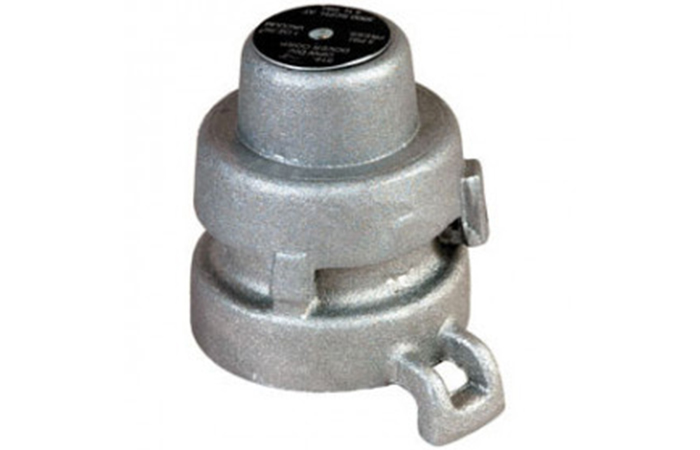
A flame arrestor (or flame arrester) is a passive, highly engineered mechanical safety device fitted to the openings of enclosures, storage tanks, or in a pipeline network. Its primary function is to allow the free flow of gases and vapors under normal operating conditions, while instantaneously preventing the transmission of a flame if the flammable gas mixture is ignited.
When a combustible gas mixture ignites, it creates a flame front that travels rapidly toward the fuel source (such as the vapor space inside a bulk storage tank). If this flame front is not stopped, it will enter the tank, causing an explosion.
Flame arrestors stop this process through a principle called thermal quenching. The core of our flame arrestors consists of a precisely manufactured "element"—typically a tightly wound, crimped metal ribbon that forms a matrix of tiny, uniform triangular passages. When the flame front hits this element, the flame is forced to divide into hundreds of microscopic channels. The massive surface area of the metal matrix rapidly absorbs the heat from the flame. As the temperature of the gas drops below its auto-ignition temperature, the flame is instantly extinguished (quenched), preventing it from reaching the protected equipment.
In the Sultanate of Oman, summer temperatures frequently exceed 45°C (113°F). This intense ambient heat drastically increases the vaporization rate of stored hydrocarbons (like petrol, diesel, and aviation fuel). This means the vapor space inside storage tanks and the emissions expelled during tank breathing are highly concentrated and exceptionally volatile. A high-quality flame arrestor is the only line of defense against external ignition sources—such as lightning strikes, static electricity, or adjacent industrial fires—igniting these volatile vapors.
Because industrial setups and vapor dynamics vary wildly, there is no "one size fits all" flame arrestor. Cochin Steel Oman supplies a comprehensive portfolio of specialized arrestors, engineered and tested according to ISO 16852 standards, to meet the precise thermodynamic requirements of your facility.
End-of-line (or vent-to-atmosphere) flame arrestors are installed at the extreme end of a pipeline or directly onto the breather vent nozzle of an atmospheric storage tank.
• Function: They prevent an unconfined external fire (e.g., a lightning strike igniting venting vapors) from traveling back into the storage tank.
• Design: These are typically equipped with an engineered weather hood to protect the flame element from Oman’s dust storms, heavy rains, and airborne debris, while still allowing the tank to "breathe" efficiently.
• Application: Standard equipment for above-ground storage tanks (ASTs), underground storage tanks (USTs) at petrol stations, and process vessel vents.
In-line flame arrestors are installed directly within a closed piping network, sandwiched between two pipe flanges.
• Function: They prevent a flame generated in one part of the plant (e.g., an incinerator or flare stack) from traveling through the pipeline and destroying upstream equipment (e.g., a vapor recovery unit or storage tank).
• Application: Vapor return lines, biogas manifolds, flare gas headers, and vapor recovery systems.
A deflagration is an explosion where the flame front travels at subsonic speeds (slower than the speed of sound in the unburned gas).
• In-Line Deflagration Arrestors: Designed to stop subsonic flames. They must be installed relatively close to the potential ignition source. If the pipe run between the ignition source and the arrestor is too long, the flame can accelerate and transition into a detonation.
• End-of-Line Arrestors: By definition, all end-of-line arrestors are deflagration arrestors, as the ignition occurs in the unconfined open atmosphere before the flame enters the pipe.
If a flame travels through a long section of pipe, the confinement causes pressure to build up ahead of the flame front. The flame accelerates dramatically, eventually transitioning from a subsonic deflagration to a supersonic detonation. A detonation produces a devastating shockwave that travels ahead of the flame.
• Function: Detonation flame arrestors are built with incredibly robust, heavy-duty housings and highly specialized, elongated quenching elements capable of withstanding massive supersonic shockwaves and extreme thermal loads.
• Application: Essential for long piping networks where the exact location of an ignition source cannot be predicted, such as complex flare gas systems or extensive vapor recovery pipelines spanning an industrial facility.
Selecting the correct flame arrestor is a complex metallurgical and thermodynamic process. Not all gases burn the same way. The type of gas present in your system dictates the Maximum Experimental Safe Gap (MESG) required for the flame element. Cochin Steel Oman supplies arrestors engineered for all recognized explosion groups:
• Group IIA (MESG > 0.90 mm): Gases with relatively low burning velocities. Includes Propane, Methane, Butane, and standard petroleum fuels (Diesel, Unleaded Petrol, Jet A-1).
• Group IIB (MESG 0.50 mm - 0.90 mm): Gases with higher burning velocities and explosive potential. Includes Ethylene, Diethyl Ether, and certain biogas mixtures.
• Group IIC (MESG < 0>
Our engineering team in Muscat works directly with your process engineers to analyze your vapor composition, operating pressures, and pipe layouts to specify the exact ATEX-certified arrestor required for absolute safety.
The coastal industrial zones of Oman (such as Sohar and Duqm) expose equipment to high salinity, while interior operations face extreme heat and sand. We manufacture and supply housings and flame elements in a variety of high-grade materials:
• Carbon Steel (WCB/WCC): With advanced epoxy coatings for standard petrochemical applications.
• Stainless Steel (SS304, SS316L): Offering superior corrosion resistance for coastal environments, aviation fuels, and aggressive chemical vapors.
• Exotic Alloys (Hastelloy, Monel, Duplex): For highly corrosive or highly acidic vapor environments.
• Aluminum: Lightweight options for specific low-pressure, non-corrosive venting applications.
A flame arrestor naturally restricts gas flow due to its crimped element. Our supplied models are aerodynamically engineered to maximize the open area of the element, ensuring a very low pressure drop. This allows your tanks to breathe efficiently, preventing dangerous over-pressure or vacuum conditions inside the tank.
For pipelines where condensation or liquid pooling is a concern, we supply eccentric in-line flame arrestors. The asymmetric design allows the bottom of the arrestor to sit flush with the bottom of the pipe, ensuring liquids drain completely and do not block the flame element.
In dusty environments like Oman, flame elements can become fouled over time, restricting flow. Our flame arrestors feature modular designs where the heavy housing remains bolted to the pipeline, but the central flame element can be easily removed, inspected, cleaned, and reinstalled by a single technician, drastically reducing maintenance downtime.
In the realm of explosive safety, there is zero margin for error. All flame arrestors supplied by Cochin Steel Oman are subjected to the most rigorous testing protocols in the world.
• ISO 16852: The international standard for testing and classifying flame arrestors.
• ATEX Directive (2014/34/EU): Mandatory European certification for equipment intended for use in explosive atmospheres.
• API 2000: American Petroleum Institute standards for venting atmospheric and low-pressure storage tanks.
• FM Global / UL Listing: Available for specific models required by international insurance underwriters.
Furthermore, we ensure that our safety equipment meets the strict local guidelines established by the Oman Civil Defence and Ambulance Authority (CDAA), the Ministry of Commerce, Industry and Investment Promotion (MoCIIP), and major Omani oil operators like PDO (Petroleum Development Oman) and OQ.
Cochin Steel Oman’s flame arrestors are the silent guardians of infrastructure across multiple sectors in the Sultanate:
• Oil and Gas Refineries: Protecting massive crude and refined product storage tanks, flare stacks, and vapor recovery units at major refineries.
• Retail Fuel Stations: Securing the underground storage tanks (USTs) and vent pipes at local petrol stations, ensuring public safety.
• Aviation Fueling Hubs: Safeguarding pristine Jet A-1 storage farms at Muscat International Airport and regional airstrips.
• Chemical and Petrochemical Plants: Preventing detonations in complex piping networks handling volatile solvents, alcohols, and reactive chemicals.
• Wastewater and Biogas: Protecting digesters and biogas power generation lines from methane explosions.
• Marine Terminals: Securing bulk liquid loading and unloading operations at Omani port facilities.
Why source your flame arrestors from a third-party distributor when you can partner directly with Oman’s premier storage tank manufacturer?
At Cochin Steel Oman, we offer total system integration. Because we engineer the steel storage tanks, fabricate the piping networks, and supply the safety fittings, we guarantee perfect mechanical compatibility. We calculate the required venting capacity of your tank (accounting for thermal in-breathing/out-breathing and pump flow rates) and size the flame arrestor and breather valves perfectly to match.
This single-source accountability eliminates the finger-pointing between different contractors, ensures rapid project execution from our Muscat facility, and guarantees a fully certified, Civil Defence-approved system.
A Pressure/Vacuum Vent (PVV) or breather valve regulates the pressure inside a tank, opening only when specific pressure or vacuum settings are reached to prevent tank rupture or implosion. A flame arrestor does not regulate pressure; it simply prevents flames from entering the tank. However, they are often installed together in a combined "End-of-Line Vent with Flame Arrestor" unit.
Due to Oman’s dusty environment and high humidity, we recommend inspecting the flame element at least every 6 months. If the element is clogged with dust, sand, or crystallized chemical deposits, the tank cannot breathe properly, which could lead to structural failure.
No. This is a critical safety point. A deflagration arrestor will be destroyed by the extreme pressure shockwave of a detonation. If there is any risk of a flame accelerating into a detonation (typically in long pipe runs), you must install a certified Detonation Flame Arrestor.
During maintenance, the element should be carefully removed and cleaned using compressed air, high-pressure steam, or an appropriate industrial solvent. Never use a wire brush or hard metallic tools, as bending or damaging the crimped ribbon matrix will destroy the unit’s ability to quench a flame.
Yes, our standard in-line and detonation flame arrestors are bi-directional, meaning they will successfully stop a flame front approaching from either direction within the pipeline.
Absolutely. Sizing a flame arrestor incorrectly can lead to catastrophic failure or severe operational flow restrictions. Our technical engineering team in Muscat will calculate your required flow rates, analyze your gas group, and specify the exact make and model required for your facility.
Standard flame arrestors are designed to stop an instantaneous flame front. If a fire stabilizes and continues to burn on the surface of the flame element (a "stabilized burn" or "endurance burn"), the heat will eventually transfer through the element and ignite the gas on the other side. If your process carries a risk of stabilized burning, we can supply specially designated "Endurance Burning" flame arrestors equipped with temperature sensors to trigger emergency shut-off valves.
Yes, we maintain a strategic inventory of standard-sized end-of-line and in-line flame arrestors in our Airport Heights facility to support urgent replacements and rapid project deployment across the Sultanate.
Do not compromise on explosive safety. Protect your personnel, your assets, and the environment by installing world-class, certified flame arrestors from the most trusted engineering firm in the Sultanate.
• Head Office & Manufacturing Facility: Airport Heights, Muscat, Sultanate of Oman (P.O. Box 3818, PC 111)
• Phone: +968 9951 1615
• Email: sales@cochinsteeloman.com
• Website: www.cochinsteeloman.com
Cochin Steel Oman—Engineering the highest standards of industrial safety for the Sultanate’s energy future.
Operating from our strategic base in the Sultanate of Oman, we serve all major national regions, including Muscat, Sohar, Salalah, Duqm, Sur, and Nizwa. Beyond Oman, we have established a strong global footprint through the successful export and installation of storage tanks, silos, and fabrication solutions across: The GCC & Middle East: United Arab Emirates (Dubai, Abu Dhabi, Sharjah, Ras Al Khaimah, Ajman, Umm Al Quwain, Al Ain, Fujairah), Saudi Arabia (Riyadh, Jeddah, Dammam, Mecca, Medina, Khobar, Jubail, Yanbu, Tabuk, Hail), Kuwait, Qatar, Bahrain, Syria, Iraq, Libya, and Yemen. Africa: Egypt, Sudan, Ethiopia, Somalia, Nigeria, Democratic Republic of Congo, Djibouti, Eritrea, Kenya, Ghana, Tunisia, Morocco, Tanzania, and Uganda. Asia: The Maldives and other emerging industrial markets.