
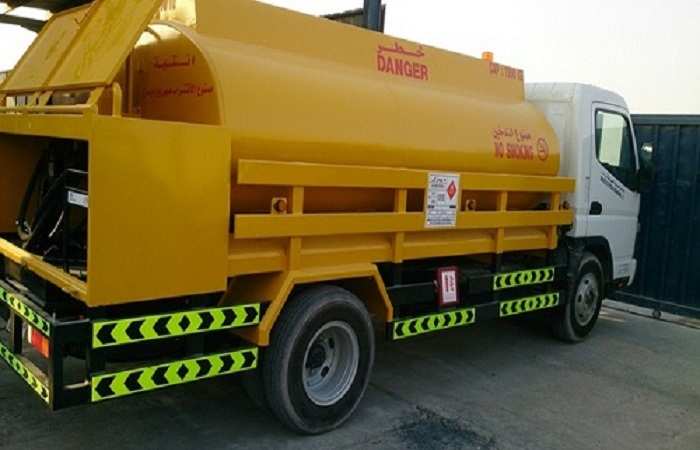
Road Tankers & Trailers Solutions in Muscat, Oman and Middle East

Leading Fuel Tanker Manufacturer in Oman

Cochin Steel Oman is a leading manufacturer and supplier of fuel tankers in the Sultanate of Oman, delivering high-capacity, safety-engineered, and precision-built mobile fuel transportation solutions for oil & gas, logistics, construction, and industrial applications. Strategically located in Airport Heights, Muscat, we bring over 18 years of engineering excellence from the Cochin Steel Group, supporting critical fuel logistics operations across Muscat, Sohar, Salalah, Duqm, and the wider GCC region.

Fuel tankers are the backbone of energy logistics, ensuring safe and efficient transportation of petroleum products such as diesel, petrol, aviation fuel, and industrial fuels. In Oman’s rapidly growing infrastructure and energy sectors, these tankers play a vital role in maintaining uninterrupted fuel supply chains.

What Is a Fuel Tanker?

A fuel tanker is a specialized vehicle designed to transport flammable liquids such as diesel, petrol, and other petroleum products safely over short and long distances. These tankers are engineered with advanced safety systems, structural integrity, and compartmentalized storage to ensure secure transport.

Fuel tankers typically consist of:

  • A cylindrical or elliptical storage tank 
  • Multiple compartments for different fuel types 
  • Pumping and dispensing systems 
  • Safety and pressure control mechanisms 

Fuel tankers are designed to safely store, transport, and deliver fuel while preventing leakage and minimizing environmental risks .

Importance of Fuel Tankers in Oman

In Oman, where industries operate across vast and remote regions, fuel tankers are essential for maintaining operational continuity.

Key Benefits:

  • Reliable fuel supply for remote oilfields and construction sites 
  • Efficient logistics for fuel distribution networks 
  • Reduced downtime for machinery and fleet operations 
  • Support for infrastructure and industrial growth 

Fuel tankers ensure that fuel reaches critical operations even in challenging environments such as deserts and offshore facilities.

Fuel Tanker Capacity and Classification

Fuel tankers are classified based on their capacity, which varies depending on application and regulatory limits.

Common Capacity Ranges:

  • Small Tankers: 1,000 – 5,000 liters (local delivery) 
  • Medium Tankers: 5,000 – 15,000 liters (commercial operations) 
  • Large Tankers: 15,000 – 40,000+ liters (bulk transport) 

Typical heavy-duty tanker trucks can carry between 19,000 to 44,000 liters, depending on configuration and regulations .

Capacity plays a crucial role in logistics efficiency, reducing transportation costs and improving fuel distribution networks.

Types of Fuel Tankers

Cochin Steel Oman manufactures a wide range of fuel tankers tailored to various industrial requirements.

1. Truck-Mounted Fuel Tankers

  • Integrated with heavy-duty truck chassis 
  • Ideal for long-distance fuel transport 
  • High capacity and efficiency 

2. Semi-Trailer Fuel Tankers

  • Large-capacity transport units 
  • Suitable for bulk fuel distribution 
  • Used by oil companies and distributors 

3. Multi-Compartment Fuel Tankers

  • Separate compartments for different fuel types 
  • Prevents contamination 
  • Enables multi-product delivery 

4. Aviation Fuel Tankers

  • Designed for aircraft refueling 
  • Equipped with filtration systems 
  • Meets strict aviation standards 

5. Off-Road Fuel Tankers

  • Heavy-duty design for rugged terrain 
  • Used in mining and oilfield operations 

6. Double-Skin (Bunded) Fuel Tankers

  • Enhanced safety with secondary containment 
  • Prevents leaks and environmental damage 

Advanced Engineering and Manufacturing Excellence

At Cochin Steel Oman, fuel tankers are manufactured using advanced engineering and fabrication technologies at our Muscat facility.

Manufacturing Capabilities:

  • CNC precision cutting 
  • Tank fabrication and structural assembly 
  • Automated MIG and Arc welding 
  • Hydrostatic testing and leak detection 
  • Non-Destructive Testing (NDT) 
  • Advanced coating and corrosion protection 

These processes ensure:

  • Leak-proof and safe construction 
  • High structural integrity 
  • Compliance with international standards 
  • Long operational lifespan 

Each tanker is engineered to withstand high temperatures, heavy loads, and continuous industrial usage.

Technical Specifications and Design Features

Typical Specifications:

  • Capacity: 5,000 to 40,000+ liters 
  • Material: Carbon steel, stainless steel, or aluminum 
  • Tank Shape: Cylindrical or elliptical 
  • Compartments: Single or multi-compartment 

Key Design Features:

  • Bottom loading systems for safer filling 
  • Pressure-vacuum vents for safety 
  • Flow meters for accurate delivery 
  • Emergency shut-off valves 
  • Anti-static grounding systems 

Modern fuel tankers use bottom-loading systems to reduce spills and improve safety during operations .

Working Principle of Fuel Tankers

Fuel tankers operate through controlled storage and dispensing systems.

Operational Process:

  1. Fuel is loaded into compartments via secure systems 
  2. Tank pressure is regulated using venting systems 
  3. Fuel is transported safely to the destination 
  4. Pumping systems discharge fuel through hoses and meters 
  5. Safety mechanisms prevent leaks and overflows 

This ensures efficient and safe fuel delivery across industrial applications.

Key Features of Fuel Tankers

1. High Storage Capacity

Designed for bulk transportation of fuel.

2. Multi-Compartment Design

Allows transport of different fuel types simultaneously.

3. Advanced Safety Systems

Includes spill prevention, pressure control, and emergency shut-offs.

4. Durability

Engineered for harsh environments and long-term use.

5. Efficient Fuel Management

Ensures accurate measurement and minimal wastage.

6. Regulatory Compliance

Built to meet international and local safety standards.

Applications Across Industries in Oman

Fuel tankers are widely used across multiple sectors:

Oil & Gas Industry

  • Transport of crude and refined fuel 
  • Supply to drilling and production sites 

Construction Sector

  • Fueling heavy machinery 
  • Supporting infrastructure projects 

Logistics and Transportation

  • Fuel distribution to stations and depots 
  • Fleet refueling operations 

Mining Industry

  • Fuel supply in remote mining areas 

Aviation Sector

  • Aircraft refueling operations 

Fuel tankers are essential for transporting fuel across industries, ensuring efficient logistics and uninterrupted operations .

Advantages of Fuel Tankers

Fuel tankers offer several advantages over stationary fuel storage systems:

  • Mobility for on-site fuel delivery 
  • Reduced dependency on fixed infrastructure 
  • Faster deployment and operational flexibility 
  • Improved logistics efficiency 
  • Reduced operational downtime 

These advantages make fuel tankers indispensable in modern industrial operations.

Design Standards and Compliance

Cochin Steel Oman ensures that all fuel tankers comply with international standards and local regulations.

Key Standards:

  • ADR regulations for hazardous material transport 
  • ISO 9001:2015 quality management 
  • NFPA standards for flammable liquids 
  • Oman regulatory compliance 

Fuel storage and transport systems must follow strict safety standards to prevent hazards and environmental risks .

Safety and Environmental Considerations

Fuel tankers are designed with strict safety and environmental controls.

Safety Features Include:

  • Double-wall construction 
  • Spill containment systems 
  • Pressure relief valves 
  • Anti-static grounding 

Environmental Protection:

  • Leak prevention systems 
  • Reduced fuel wastage 
  • Compliance with environmental regulations 

Proper tanker design minimizes risks associated with transporting flammable liquids.

Customization and Engineering Flexibility

Cochin Steel Oman offers fully customized fuel tanker solutions tailored to project requirements.

Customization Options:

  • Tank capacity and configuration 
  • Material selection 
  • Pumping and dispensing systems 
  • Multi-compartment design 
  • Safety and monitoring systems 

Each tanker is engineered to meet operational needs and regulatory requirements.

Installation and Operational Support

We provide complete support services including:

Services Include:

  • Design consultation 
  • Custom fabrication 
  • Delivery and commissioning 
  • Maintenance and inspection support 

Our team ensures seamless integration into your operations.

Export and GCC Supply Capability

From our Muscat facility, Cochin Steel Oman supplies fuel tankers across:

  • Oman (Muscat, Sohar, Salalah, Duqm) 
  • UAE, Saudi Arabia, Qatar, Kuwait, Bahrain 
  • Africa and Asia 

We ensure efficient logistics, timely delivery, and reliable performance.

Why Choose Cochin Steel Oman

Proven Industry Experience

Over 18 years of expertise in tanker manufacturing.

Advanced Engineering

State-of-the-art fabrication and design capabilities.

Custom Solutions

Tailored systems for diverse industrial applications.

Local Expertise

Strong understanding of Oman’s industrial environment.

End-to-End Support

From design to delivery and maintenance.

Frequently Asked Questions (FAQs)

What is a fuel tanker used for?

It is used to transport and distribute fuel such as diesel and petrol.

What capacity fuel tankers do you offer?

From small units to large tankers exceeding 40,000 liters.

Are fuel tankers safe?

Yes, when designed and operated according to safety standards.

Can fuel tankers be customized?

Yes, fully customizable based on requirements.

Do you provide support services?

Yes, including delivery, commissioning, and maintenance.

Cochin Steel Oman is a trusted leader in fuel tanker manufacturing in Oman, delivering durable, safe, and high-performance fuel transportation solutions. With advanced engineering, strict compliance standards, and a commitment to operational excellence, we provide systems that ensure efficient fuel logistics, reduced downtime, and long-term reliability.

Contact Us

COCHIN STEEL OMAN
Airport Heights, Muscat, Sultanate of Oman
P.O. Box 3818, PC 111
+968 9951 1615
sales@cochinsteeloman.com
www.cochinsteeloman.com

Exports

Cochin Steel Oman leverages its extensive engineering knowledge and robust logistics network to deliver our products worldwide. Our dedicated export team possesses deep experience in international trade, ensuring strict compliance with accurate shipping terms and global customs documentation. We have built fantastic relationships with world-class freight forwarders, enabling us to ship to some of the most extreme and remote locations around the world. Even if you think your end destination may be a logistical challenge, please let us know, we will find a seamless transport solution for you.

Note:

Operating from our strategic base in the Sultanate of Oman, we serve all major national regions, including Muscat, Sohar, Salalah, Duqm, Sur, and Nizwa. Beyond Oman, we have established a strong global footprint through the successful export and installation of storage tanks, silos, and fabrication solutions across: The GCC & Middle East: United Arab Emirates (Dubai, Abu Dhabi, Sharjah, Ras Al Khaimah, Ajman, Umm Al Quwain, Al Ain, Fujairah), Saudi Arabia (Riyadh, Jeddah, Dammam, Mecca, Medina, Khobar, Jubail, Yanbu, Tabuk, Hail), Kuwait, Qatar, Bahrain, Syria, Iraq, Libya, and Yemen. Africa: Egypt, Sudan, Ethiopia, Somalia, Nigeria, Democratic Republic of Congo, Djibouti, Eritrea, Kenya, Ghana, Tunisia, Morocco, Tanzania, and Uganda. Asia: The Maldives and other emerging industrial markets.

Back

Our Location